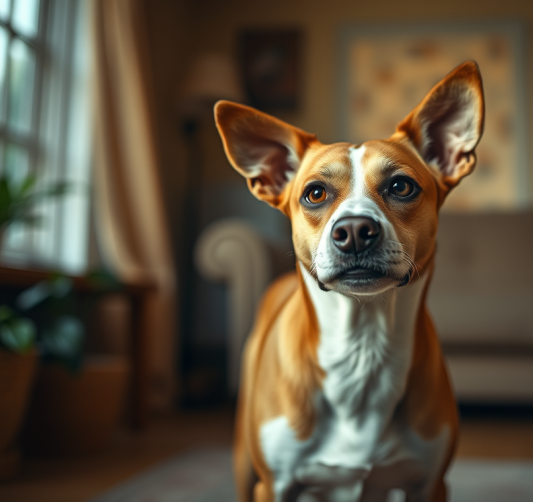
Effects of a Brief Separation From the Owner While in the Home Environment: Comparison of Fearful and Control Dogs

Bentosela, M., Cavalli, C., Dzik, M. V., Caliva, M., & Udell, M. A. R. (2024). Effects of a Brief Separation From the Owner While in the Home Environment: Comparison of Fearful and Control Dogs. Anthrozoös37(5), 959–975. https://doi.org/10.1080/08927936.2024.2389643

Abstract: Separation from their owner is stressful for some dogs. Studies examining this phenomenon are usually carried out in novel places. However, given that separation distress can also impact the behavior and welfare of dogs in their home environment, it is critical to study them in this context as well. Our first aim was to evaluate the reactions of dogs to a brief separation from their owner in the home. Secondly, we aimed to examine differences in the reactions of dogs classified as fearful, without (n = 27) and with (n = 17) aggressive responses, as well as controls (n = 28). All dogs were adults, from various breeds and mixes, and lived as pets. Each dog’s behavior was evaluated across three phases: (1) 2 min interaction with owner (baseline), (2) 3 min separation from the owner (alone), and (3) 2 min after the owner returned (owner return). We measured exploration as well as affiliative and stress behaviors. The results show that dogs explored the environment more in phase 1, directed more behaviors toward the door through which the owner had left in phase 2, followed the owner leaving at the end of phase 2, and greeted them when they returned in phase 3. Dogs also spent more time near the owner after their absence in phase 3 than in phase 1. A decrease in exploration triggered by the absence of the owner in phase 2 and a lack of full exploration recovery in phase 3 were observed as possible indicators of stress. No differences were found between fearful dogs and controls. The results indicate that it is possible to evaluate dogs’ reactions to separation from their owner in a more naturalistic context. This could aid in the development of strategies to improve separation-related problems in dogs and thus improve their welfare and quality of life.
A Cross-Cultural Comparison of Cat–Human Relationships in the United States and Japan

Vitale, K. R., Takagi, S., Arahori, M., Chijiiwa, H., Udell, M. A. R., & Kuroshima, H. (2024). A Cross-Cultural Comparison of Cat-Human Relationships in the United States and Japan. Anthrozoös37(5), 813–831.

Abstract: Across the world, more and more cats are being kept in captive spaces such as homes, animal shelters, and cat cafés. There is a growing need to understand whether cross-cultural differences influence human-animal interactions in these human-controlled environments. Cats are one of the world’s most popular companion animals, and both the US and Japan have high rates of cat ownership. However, cultural differences may account for differences in how people feel about cats and how humans and cats behave toward one another. The research aim was to examine whether differences exist between the US and Japan across multiple facets of the human-cat relationship. Study 1 examined each country’s attitude toward pet cats. Results indicate US citizens have significantly more positive attitudes toward pet cats than Japanese citizens. Study 2 examined owner attachment to their cat and pet cat social behavior. Results indicate owners in both countries were highly attached to their cats. In the US, but not Japan, owner attachment level predicted pet cat sociability toward the owner. Study 3 examined cat social behavior in cat cafés. The results of studies 2 and 3 indicate that pet cats and café cats in the US spend a greater proportion of time in proximity to people compared with pet and café cats in Japan. In all, differences and similarities were seen between the US and Japan. In humans, differences in childhood cat experiences and lower rates of cat ownership may impact attitudes toward cats. In pet cats, owner characteristics, the size of the cat’s environment, cat care practices, and attitudes toward cats may impact cat social behavior. Future exploration in this area can benefit our understanding of cross-cultural human-animal interactions and how to apply these findings to improve captive-cat welfare.

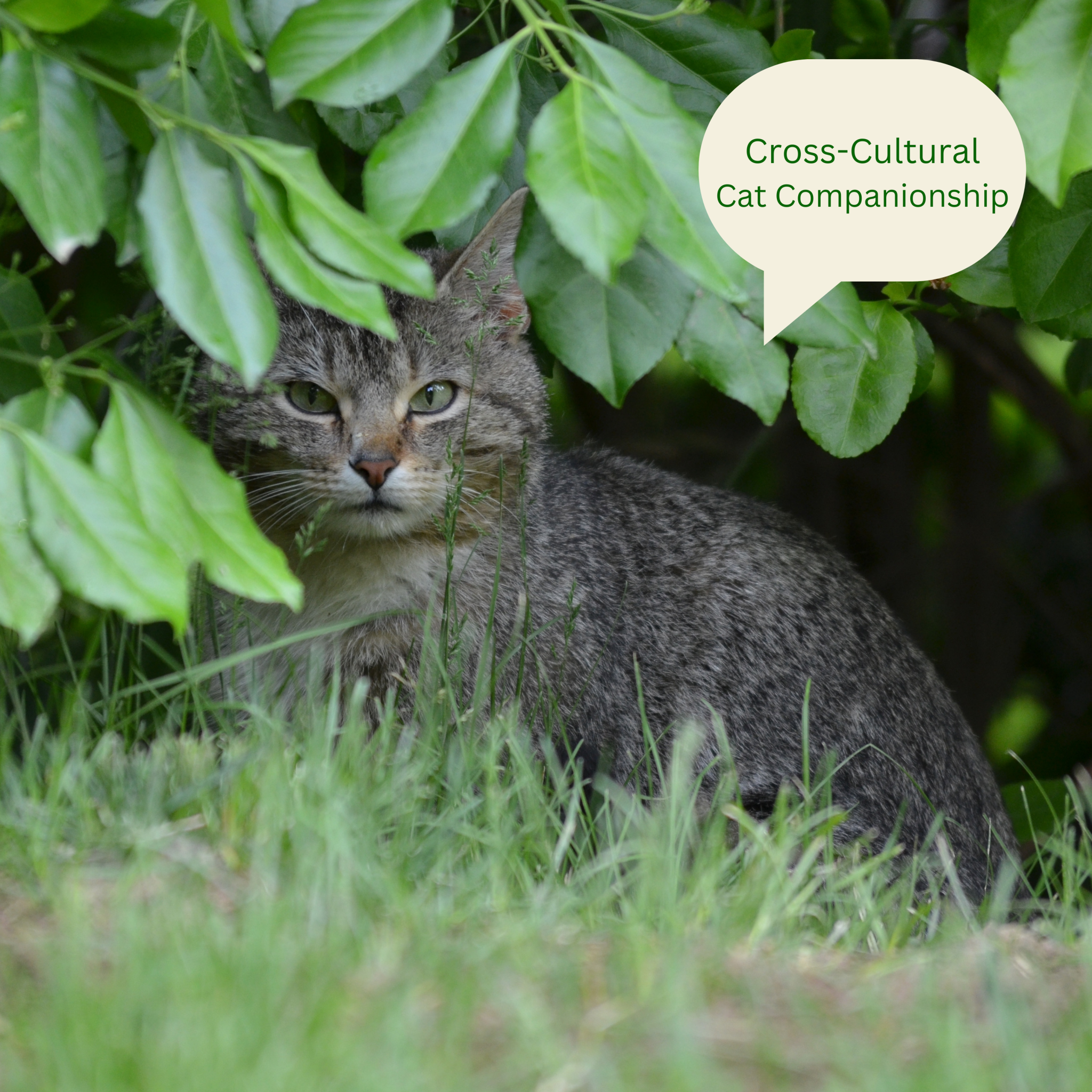
Cat under a bush.
Photo Credit: Dr. Kristyn Vitale www.maueyes.com