The role of oxytocin in relationships between dogs & humans & potential applications for the treatment of separation anxiety in dogs

EmberThielke, LE & Udell, MAR (2015) The role of oxytocin in relationships between dogs and humans and potential applications for the treatment of separation anxiety in dogs. Biological Reviews. DOI: 10.1111/brv.12235

Link to publication 
Link to full text

Abstract

The hormone oxytocin plays an important role in attachment formation and bonding between humans and domestic dogs. Recent research has led to increased interest in potential applications for intranasal oxytocin to aid with the treatment of psychological disorders in humans. While a few studies have explored the effects of intranasally administered oxytocin on social cognition and social bonding in dogs, alternative applications have not yet been explored for the treatment of behavioural problems in this species. One potentially important application for intranasal oxytocin in dogs could be the treatment of separation anxiety, a common attachment disorder in dogs. Here we provide an overview of what is known about the role of oxytocin in the human–dog bond and canine separation anxiety, and discuss considerations for future research looking to integrate oxytocin into behavioural treatment based on recent findings from both the human and dog literature.
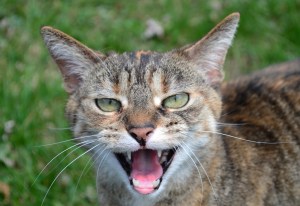
What’s inside your cat’s head? A review of cat (Felis silvestris catus) cognition research past, present & future

meowVitale Shreve, KR & Udell, MAR (2015) What’s inside your cat’s head? A review of cat (Felis silvestris catus) cognition research past, present and future.  Animal Cognition, 18(6): 1195-1206.

Link to publication
Link to full text

Abstract

The domestic cat (Felis silvestris catus) has shared an intertwined existence with humans for thousands of years, living on our city streets and in our homes. Yet, little scientific research has focused on the cognition of the domestic cat, especially in comparison with human’s other companion, the domestic dog (Canis lupus familiaris). This review surveys the current status of several areas of cat cognition research including perception, object permanence, memory, physical causality, quantity and time discrimination, cats’ sensitivity to human cues, vocal recognition and communication, attachment bonds, personality, and cognitive health. Although interest in cat cognition is growing, we still have a long way to go until we have an inclusive body of research on the subject. Therefore, this review also identifies areas where future research must be conducted. In addition to the scientific value of future work in this area, future research on cat cognition could have an important influence on the management and welfare of pet and free-roaming cats, leading to improved human-cat interactions.

Exploring breed differences in dogs (Canis familiaris): does exaggeration or inhibition of predatory response predict performance on human-guided tasks?

cropped-moniqueember.pngUdell, MAR, Ewald, M, Dorey, NR, Wynne, CDL(2014). Exploring breed differences in dogs (Canis lupus familiaris): Does exaggeration or inhibition of predatory response predict performance on human-guided tasks? Animal Behaviour, 89, 99-105. 

Link to publication
Link to full text

Abstract

Domestic dogs’, Canis familiaris, responsiveness to human action has been a topic of scientific interest for almost two decades. However, are all breeds of domestic dog equally prepared to succeed on human-guided object-choice tasks? In the current study we compared three breeds of dog with distinct predatory motor pattern sequences still under direct selection pressure today based on their traditional working roles. Airedale terriers (hunting dogs) are bred for a fully intact predatory sequence, matching the wild-type form. Border collies (herding dogs) are bred for an exaggeration of the eye-stalk-chase component of the predatory sequence. Anatolian shepherds (livestock-guarding dogs) are bred for the inhibition of the full predatory sequence. Here we asked whether and how these opposing selection pressures correspond with each breed’s tendency to track and follow a human point to a target in an object-choice task. Our results suggest that the presence or exaggeration of key components of the predatory sequence may in fact predict superior initial performance on pointing tasks when compared to a breed selected for its inhibited predatory response. This is the first time relative success on a pointing task has been tied to a known heritable behavioural mechanism (breed-specific motor patterns). However, we also demonstrate that breed-specific differences can sometimes be overcome with additional experience. Thus, an individual’s performance on human-guided tasks is still best predicted by a combination of genetic and lifetime factors. Broader implications for the understanding and investigation of canine social cognition are discussed.